Eye-to-Eye Turnbuckles and How They Differ From the Rest
- By William Hanes
- •
- 05 Apr, 2018
- •
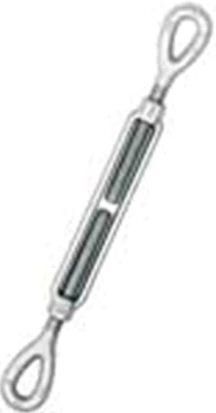
Turnbuckles are essential for working with any equipment that faces excess stress and tension while lifting or moving heavy objects. Turnbuckles are used to increase or decrease tension in steel cables, making minute adjustments to rigs that require specific strain calibration. A center of gravity that is misconfigured can cause loads to swing, loosen, or even fall. Turnbuckles, therefore, are used to make on-the-fly changes to stabilize a load and correct any imbalances that are present.
Turnbuckles of differing design provide versatility when working with tension cables by modifying possible rigging setups. There are six primary types of turnbuckle all together, including jaw-to-jaw, hook and eye, jaw and eye, jaw and hook, hook-to-hook, and eye-to-eye turnbuckles.
Eye-to-Eye
The eye-to-eye turnbuckle features a teardrop fitting on each end of its frame. Eyes of the turnbuckle are connected to the chains of the rigging, and there are other rigging attachments such as slings attached to a shackle on the other end of the turnbuckle. The eye-to-eye turnbuckle features a safety pin at the end of the eye, permanently connecting the eye so they will never separate, adding extra security to the rigging. Eye to eye turnbuckles are made of steel and recommended for straight or in-line pulling platforms.
Jaw-to-Jaw Turnbuckles
Jaw to jaw turnbuckles feature a jaw end that resembles a “u” shape. The jaw to jaw can be used many different ways, including attaching a sling straight to the end or having the jaw fit over a lifting lug. Adding a pin to the shackle increases the security therein. This extra pin secures the sling into the clevis at the end of the turnbuckle pin, protecting against the separation of the sling. The turnbuckle is intended for straight or in-line pulley usage only. They are commonly made from hot-dipped galvanized steel.
Hook to Hook
Hook and hook turnbuckles feature a hook on both ends. They are typically used for guy wire applications, as the hook and hook designs are the easiest to install and tighten, which allows for additional length in the rigging. However, the hook and hook lacks a safety latch, which increases the risk associated with the lift, leaving a load unprotected by a backup mechanism if any portion should fail.
Jaw to Eye
Jaw to eye turnbuckles feature a jaw fixture on one end and an eye on the other. The dual nature of the turnbuckle gives it more flexibility and added security as both accessories feature a safety pin. Because jaw to eye turnbuckles have two different ends, the turnbuckle requires a fixed point or a lug, which can be difficult with some rigging arrangements. You should install the turnbuckle onto the jaw end and shackle the sling to the eye end for the most optimal use.
Each kind of turnbuckle brings advantages and disadvantages to each individual lifting situation. Every rigging scenario is different, requiring different types of equipment to ensure the maximum efficiency and safety of the project. Factors that influence which turnbuckle should be used include the headroom challenges, confines of your workspace, and any restrictions in moving the load or offsets in center of gravity. Whether you require an eye to eye turnbuckle or a jaw to jaw, make sure you invest in quality and industry-approved materials that are designed to work any job. For more information on turnbuckles and other rigging supplies, and to find the best brands for your job, visit empirerigging.com.
